
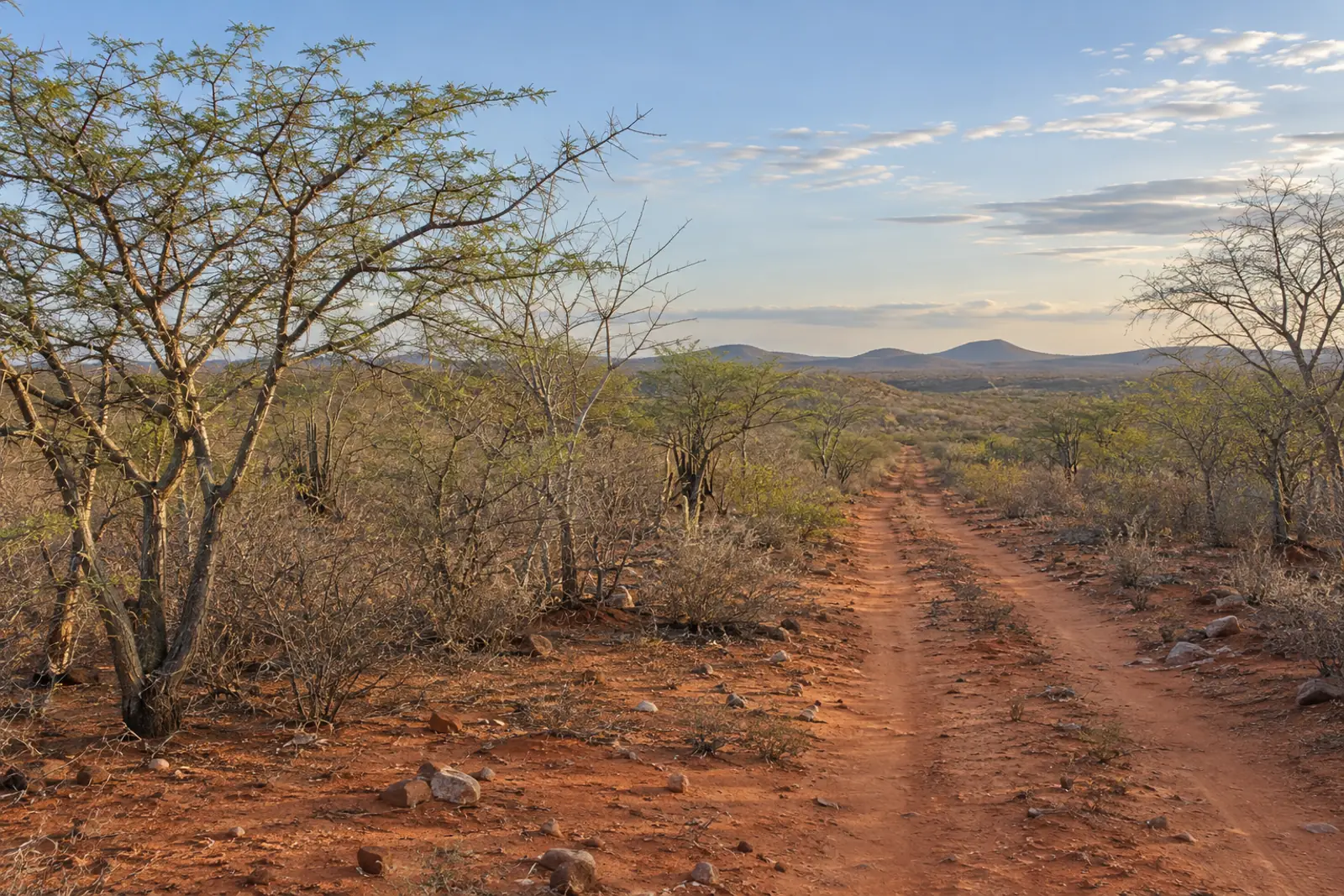
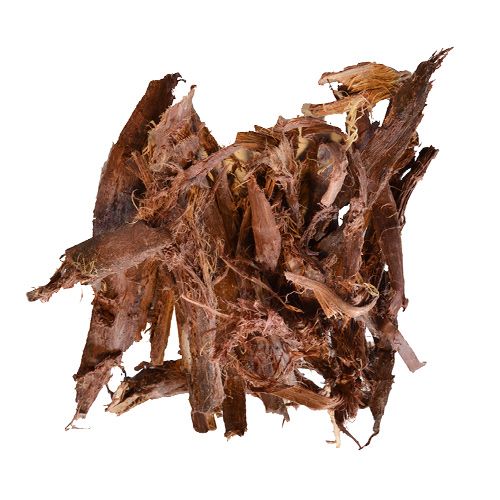
Mimosa hostilis root bark comes from Mimosa tenuiflora, a tree native from southern Mexico to Venezuela and north-east Brazil. The bark sold in Europe is usually labelled as Brazilian, and Brazil is where the tree is most widespread: across the Caatinga, the dry thorn forest of the country's north-east. A second, smaller source area lies in southern Mexico, where the same tree is called tepescohuite.
The range on a map
The World Checklist of Vascular Plants, kept by the Royal Botanic Gardens, Kew, gives the native range as "S. Mexico to Venezuela, NE. Brazil". It names native populations in Brazil, Colombia, El Salvador, Honduras, Mexico, Nicaragua, Panama and Venezuela, and lists the tree as introduced in Java, Sumatra, Malaya and New Guinea (Kew, World Checklist of Vascular Plants).
| Area | What the sources say |
|---|---|
| North-east Brazil | native in Alagoas, Bahia, Ceará, Maranhão, Minas Gerais, Paraíba, Pernambuco, Piauí, Rio Grande do Norte and Sergipe (Flora e Funga do Brasil) |
| Brazilian latitudes | from 3°45' S in Ceará to 15° S in Bahia, at 10 to 900 m (Embrapa) |
| Southern Mexico | Isthmus of Tehuantepec in Oaxaca; the Cintalapa and Jiquipilas valley and the plains west of Arriaga in Chiapas (Camargo-Ricalde 2000) |
| Further south | Colombia, Venezuela and Central America, in smaller numbers |
The Brazilian list marks the species as not endemic to Brazil and places it in two vegetation domains, the Caatinga and the Cerrado.
The Caatinga, where most of it grows
The Caatinga covers 86.2 million hectares, 10.1 % of Brazil. In 2024, 60 % of it was still covered by native vegetation, according to the MapBiomas land-cover survey (MapBiomas, Caatinga factsheet, 2025). Rainfall where the tree grows ranges from 380 mm a year in Paraíba to 1,650 mm in Ceará (Embrapa).
Jurema preta, the Brazilian name of the tree, is a pioneer. It colonises bare and disturbed ground, fixes nitrogen through root nodules and grows fast in its first years. The Embrapa monograph notes that in some heavily disturbed parts of the Caatinga it is almost the only tree left standing. That matters for the supply chain: much of the tree's habitat is old farmland and degraded scrub, close to roads and villages.
Mexico and the name tepescohuite
In Mexico the tree is called tepescohuite. Camargo-Ricalde, who mapped it for her 2000 review, describes extensive thickets that cover many kilometres of plains and low hills, growing most densely on abandoned or fallow farmland, from sea level to about 1,100 m.
In the 1980s the Mexican bark went through a short commercial boom after television and press coverage. From 1986 it was sold far beyond Mexico. A widespread claim that the tree grew only in the Cintalapa valley in Chiapas pushed prices up and set off alarm about its survival. Camargo-Ricalde showed that the species in fact ranges from Brazil to Mexico. Bark offered as "Mexican" is the same species as Brazilian bark; the label tells you the country of harvest, nothing more.
What trade data can tell you
Less than you might hope. Brazil's national survey of wild-harvested products (IBGE PEVS) records tanning barks such as angico and barbatimão by name, but has no category for jurema. Export statistics use broad tariff codes, so no figure for exported Mimosa root bark exists in public data. We found no study that names the municipalities that supply the international trade, so this site does not name any either.
What you can know about a batch comes from the seller. Avalon Magic Plants states that its bark is "imported directly from Brazil" and lists the origin as Brazil on the product page. For questions about a specific batch, such as region or harvest date, ask the shop's customer service.
Growing the tree instead
Outside its range the tree only survives indoors or in a heated greenhouse: the Embrapa monograph records no frost anywhere in its Brazilian range. Seeds are a way to see the plant itself where the bark is not an option. The legal checkpoint shows where that applies.
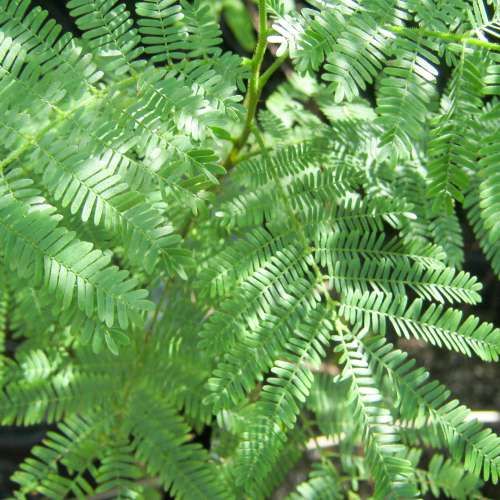 Mimosa Hostilis (Jurema Preta) 10 Seeds
View in shop
Contents#5954
Mimosa Hostilis (Jurema Preta) 10 Seeds
View in shop
Contents#5954
 Avalon Heating Mat Large - 15x28 cm
View in shop
Avalon Heating Mat Large - 15x28 cm
View in shop
Next on the route: how the roots are dug and what that means for the trees, at the harvest checkpoint.